

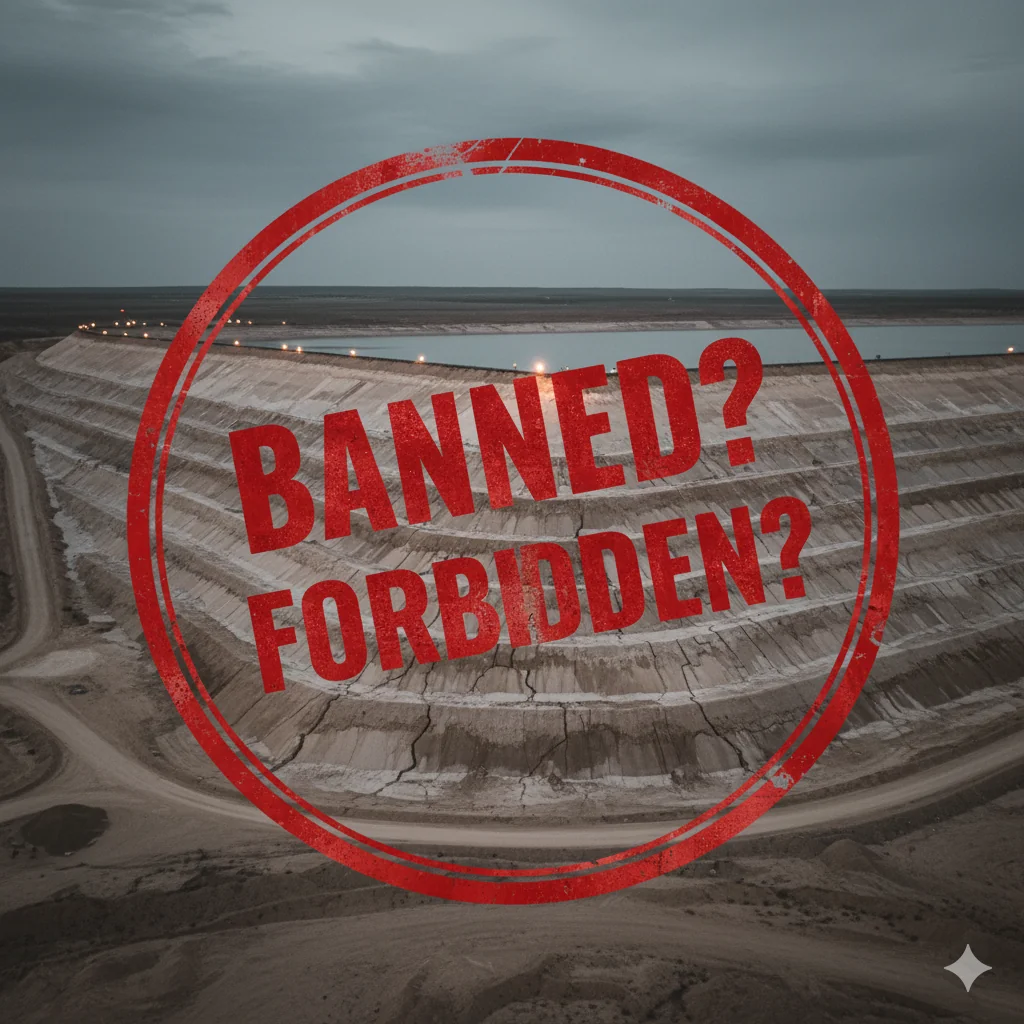
Bans, Restrictions and the Road Not Taken: Should Some Tailings Practices Be Forbidden?
Examination of whether certain tailings disposal methods (upstream raises, riverine discharge, unfiltered tailings) should be banned, and practical policy alternatives for regulators and operators.
Introduction: why the question matters
Debates about banning specific tailings methods are no longer academic. Regulators, communities and investors increasingly ask whether some practices are simply too risky to allow. The core question is straightforward but fraught: do you eliminate options that carry higher failure potential, even when they may be cheaper or technically feasible, or do you let engineers decide on a case-by-site basis?
This post breaks down the main practices under scrutiny, the arguments on both sides, and pragmatic policy paths that balance safety, cost and feasibility. The goal is to give operators, regulators and civil society a clear framework for evaluating whether prohibition, restriction or conditional use makes sense.
Practices most commonly proposed for bans
These methods attract the most attention in ban debates:
Upstream tailings dam raises, incremental raises where the dam crest is built on consolidated tailings. Historically cheaper and faster to construct, but more vulnerable to liquefaction and progressive failure in some settings.
Riverine or submarine discharge, disposing of tailings into river channels or the sea. Critics point to ecological and downstream impacts; proponents sometimes cite limited alternatives for water-scarce or logistically constrained sites.
Unfiltered (low-density) tailings in high-risk settings, large, water-bearing impoundments where filtered or paste alternatives could materially reduce ponded water and failure consequences.
Each of these has contexts where risk is elevated (seismic zones, high rainfall, downstream population centers, sensitive ecosystems), and contexts where engineering controls can lower risk. That nuance is central to the policy trade-offs.
Arguments in favor of bans
Preventive clarity: A ban removes ambiguity, operators and regulators don’t wrestle with complex trade-offs when mitigation fails or is poorly implemented.
Public confidence: Communities and investors often trust categorical prohibitions more than conditional approvals, reducing social conflict.
Avoid systemic risk: Where a practice has a consistent history of failures in comparable settings, a ban prevents repeat harm.
Drive safer innovation: Removing cheap, risky options creates commercial demand for safer methods (filtered tailings, dry stacking, centralized processing).
From a precautionary perspective, bans are attractive: they reduce the chance of catastrophic outcomes and send a clear signal about acceptable risk tolerance.
Arguments against blanket bans
Site-specific engineering matters: Geology, climate, hydrology and economics vary hugely. A method that is dangerous in one basin may be acceptable in another with robust controls.
Economic and energy impacts: Alternatives like filtered tailings can require significant CAPEX, energy and water, which may be prohibitive for smaller operators or projects in developing jurisdictions. Bans risk shutting down projects or pushing them underground.
Unintended consequences: A strict ban may incentivize informal or poorly regulated alternatives, or move disposal to even less transparent routes.
Transition feasibility: Retrofitting legacy facilities or replacing existing dams can be technically and financially onerous, especially where companies lack resources for immediate upgrades.
In short: while bans reduce certain risks, they can create new problems if not paired with realistic transition pathways and financial support.
Practical policy options between “ban” and “status quo”
Complete prohibition isn’t the only lever. Several intermediate approaches balance protection and pragmatism:
Conditional prohibition: Ban the practice in high-risk contexts (e.g., populated downstream areas, high seismic hazard, protected ecosystems), allow conditional use elsewhere with strict controls and independent audits.
Phase-out timelines: Set clear deadlines for eliminating the riskiest implementations (e.g., upstream raises in certain consequence classes) and provide technical/financial assistance for replacement.
Performance thresholds: Permit methods only if facilities meet mandatory performance metrics (e.g., freeboard, pore-pressure behaviour, real-time monitoring systems, third-party certification).
Financial and permitting incentives: Use bonding, higher insurance requirements, or stricter permitting fees to internalize the true cost of risk, making risky methods economically unattractive.
Mandatory transition planning for legacy sites: Require operators to file and fund multi-year plans to remediate or convert legacy structures.
These approaches let regulators tailor responses to local risk tolerance, technical capacity and economic realities.
What companies should do now (operational checklist)
Do not assume a single outcome: Prepare for stricter local rules by modeling cost/benefit for conversion to filtered or paste tailings.
Prioritize high-consequence facilities: Triage where bans or phase-outs are most likely to apply and plan upgrades first.
Build transparent decision records: If a conditional use is chosen, document engineering rationale, consequence classification, monitoring systems, and community engagement, this legal and reputational record matters.
Engage early with stakeholders: Communities and financiers influence policy; proactive dialogue reduces surprise and strengthens social license.
Plan financial assurance: Anticipate requirements for bonds or trust funds that cover remediation if prohibition forces closure or conversion.
What regulators and communities can consider
Risk-based zoning: Define “no-go” zones where risky practices are unacceptable (e.g., urban downstream corridors, critical water sources).
Clear timelines and enforcement: If phasing out, publish realistic deadlines and a pathway for enforcement.
Support mechanisms: Offer technical assistance and funding mechanisms (public-private financing, concessional loans) to help operators transition.
Independent verification: Require third-party certification of any conditional permits and publish audit results for transparency.
Conclusion: a pragmatic road forward
There is no universal answer. Bans can protect people and ecosystems but must be implemented thoughtfully to avoid perverse outcomes. The most defensible policy mixes protective prohibition in clearly high-risk contexts with conditional, accountable use elsewhere, all backed by transparent oversight, financial assurance and realistic transition support.
Sources & further reading: Major regulatory and company reports on tailings policy; Global Tailings Review.
Work through GISTM requirements
Use GISTM.net to work through GISTM requirements and evaluate your facility’s conformance as you turn these ideas into an action plan.