

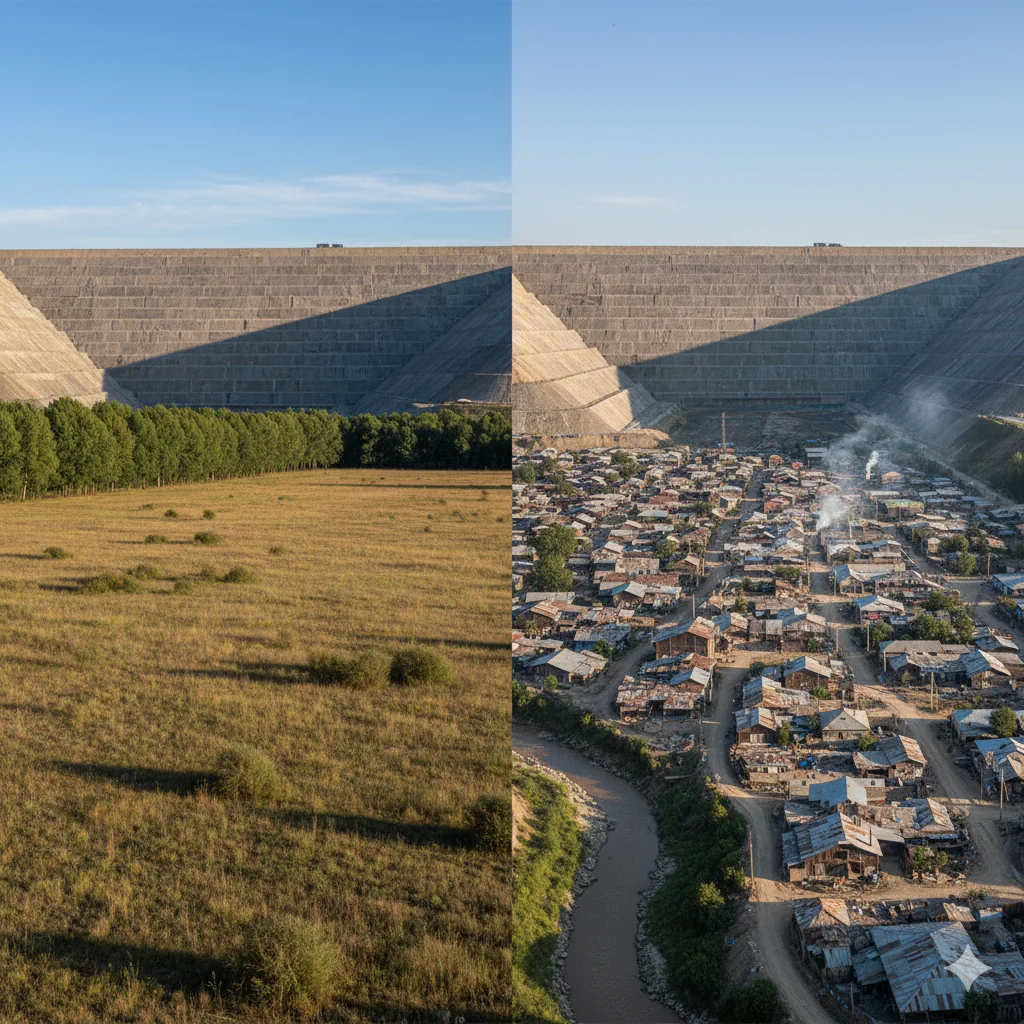
The Consequence Classification Paradox: Why 'Extreme' Doesn't Mean 'Dangerous'
The Consequence Classification Paradox: Why ‘Extreme’ Doesn’t Mean ‘Dangerous’ (And What It Actually Means)
The community meeting had been going well until the slide appeared on screen.
“Our facility has been assessed as Consequence Classification: Extreme.”
The room erupted. Faces went from attentive to alarmed. Hands shot up. The questions came rapid-fire:
“You’re saying this is EXTREMELY DANGEROUS?” “Why are you operating an extThat’s how you turn “Extreme” from a communication crisis into a confidence builder.
Does your GISTM compliance system help you communicate consequence classification effectively, or does it just record the designation?e hazard in our valley?” “When are you moving it somewhere safe?” “Should we evacuate our families?” The technical team tried to explain: “No, no - Extreme doesn’t mean dangerous. It just means if something went wrong, many people could be affected. But we’ve designed it very conservatively precisely because of that classification…” Too late. The headline in next day’s local paper: “MINE ADMITS TAILINGS FACILITY RATED EXTREME RISK” The mine’s community relations, built over years, damaged in minutes. All because of a fundamental misunderstanding about what consequence classification actually means.
This scenario plays out somewhere in the mining world regularly. And it reveals one of GISTM’s most misunderstood concepts: Consequence Classification. Let’s clear up the confusion once and for all. What Consequence Classification Actually Measures Here’s what doesn’t determine your facility’s consequence classification:
How dangerous your facility is How likely it is to fail How well it’s designed How carefully it’s operated How much monitoring you have Your safety record Your management systems
None of that matters for classification. Here’s what does matter - one thing, and one thing only: If your facility failed catastrophically, what would the consequences be? That’s it. That’s the whole determination. GISTM Requirement 4.1 is crystal clear: “Determine the consequence of failure classification… by assessing the downstream conditions.” Downstream conditions. Not facility conditions. The classification answers: “How bad would it be if this failed?” It does NOT answer: “How likely is this to fail?” Think of it like earthquake building codes: A hospital in Los Angeles gets very stringent seismic requirements - not because hospitals are inherently dangerous, but because if the hospital fails during an earthquake, many people die and critical medical services are lost. A warehouse in the same location gets less stringent requirements - not because it’s safer, but because if it fails, the consequences are less severe (property damage, not mass casualties). Both buildings might be equally unlikely to fail. But one has higher consequence if failure occurs. Same logic applies to tailings facilities. The Five Categories: What They Really Mean GISTM uses five consequence classifications based on ICOLD (International Commission on Large Dams) methodology. Let’s decode what each actually means: Low Consequence Classification What it means:
Population at risk: None Potential loss of life: None expected Limited infrastructure downstream Minimal environmental impact potential Economic losses if failure occurs: Less than $1M
What it does NOT mean:
“This facility is low priority” “Safety doesn’t matter much here” “We can use less rigorous design”
Real example: Small tailings facility in remote area with no permanent downstream population, minimal infrastructure, limited environmental receptors. If it failed, you’d have property damage and cleanup costs, but no one would die. Implication: Still must be designed competently and operated safely. Just doesn’t require the same level of conservatism and review as higher classification facilities. Significant Consequence Classification What it means:
Population at risk: 1-10 people Potential loss of life: Unspecified (possibly 1-10) Some infrastructure downstream (workplaces, roads) Moderate environmental effects possible Economic losses: Less than $10M
Example: Facility with a few downstream buildings - maybe a maintenance facility, some seasonal worker camps, rarely-used access roads. High Consequence Classification What it means:
Population at risk: 10-100 people Potential loss of life: Possible (1-10) Infrastructure present (facilities, transportation routes) Significant environmental impacts possible Economic losses: Less than $100M
Example: Facility upstream of a small village, some agricultural land, local roads, stream used for livestock water. Very High Consequence Classification What it means:
Population at risk: 100-1,000 people Potential loss of life: Likely (10-100) Important infrastructure (highway, industrial facilities) Major environmental impacts likely Economic losses: Less than $1B
Example: Facility upstream of a town, major transportation corridor, significant agricultural/industrial areas, important river system. Extreme Consequence Classification What it means:
Population at risk: More than 1,000 people Potential loss of life: Many (more than 100) Critical infrastructure (hospitals, major industrial complexes) Catastrophic environmental impacts possible Economic losses: More than $1B
Example: Facility upstream of a city or multiple communities, major infrastructure, critical water resources. Notice the pattern: Each classification is defined entirely by downstream conditions - who and what could be affected if failure occurred. Nothing about the facility itself. The Paradox That Confuses Everyone Here’s why this is so counterintuitive: Scenario A: Poorly designed facility, minimal monitoring, questionable operations, no ITRB, inadequate emergency planning - but in remote location with no downstream population. Classification: Low or Significant Scenario B: Excellently designed facility, state-of-the-art monitoring, world-class operations, robust ITRB oversight, comprehensive emergency planning - but upstream of a city. Classification: Extreme Which facility is “safer”? Probably Scenario B, by a huge margin. Which has higher consequence classification? Scenario B. This confuses people because we instinctively conflate “consequence” with “danger.” But they’re different concepts:
Danger/Risk = Likelihood à Consequence Consequence Classification = Just the consequence part, ignoring likelihood
Why does GISTM separate them? Because designing for consequences requires different thinking than managing probability. How Classification Drives Design: The Real Purpose Once you understand that classification measures “what could happen, not how likely,” the rest of GISTM makes sense. The logic chain: Step 1: Determine consequence classification (based on downstream conditions) Step 2: Select design criteria appropriate to that classification (Annex 2, Tables 2 & 3) Step 3: Design the facility to meet those criteria Step 4: Operate, monitor, and review it according to classification-specific requirements The philosophy: If consequences would be severe, design must be more conservative - regardless of what you think the probability of failure is. Design Criteria Scale With Classification Flood design criteria (from GISTM Annex 2, Table 2): ClassificationOperations/ClosurePost-ClosureLow1-in-200 year1-in-10,000 yearSignificant1-in-1,000 year1-in-10,000 yearHigh1-in-2,475 year1-in-10,000 yearVery High1-in-5,000 year1-in-10,000 yearExtreme1-in-10,000 year1-in-10,000 year Seismic design criteria (Table 3): ClassificationOperations/ClosurePost-ClosureLow1-in-200 year1-in-10,000 yearSignificant1-in-1,000 year1-in-10,000 yearHigh1-in-2,475 year1-in-10,000 yearVery High1-in-5,000 year1-in-10,000 yearExtreme1-in-10,000 year1-in-10,000 year See the pattern: Higher consequences — More conservative design criteria — Lower probability of failure An Extreme facility designed to these criteria is arguably SAFER than a Low facility - because the design must withstand more extreme events. Review Requirements Scale Too Dam Safety Review frequency (Requirement 10.5):
Very High or Extreme: At least every 5 years All others: At least every 10 years
Independent review:
Very High or Extreme: Must have ITRB Others: May have senior independent technical reviewer instead
Disclosure requirements: More extensive for higher classifications The pattern: Higher consequences — More rigorous oversight — Better ongoing assurance Communicating Classification Without Causing Panic This is where most operations struggle. How do you tell stakeholders “our facility is classified Extreme” without triggering the response from our opening scenario? What NOT to Say Bad: “Our facility is Extreme classification.” (Stops there, leaving people to interpret) Why it fails: Without context, people hear “extreme” and think “extremely dangerous.” What TO Say: The Framework Better approach - four-part communication: Part 1: Acknowledge Classification “Our facility has been assessed as Extreme Consequence Classification according to international standards.” Part 2: Explain What It Means “This classification is based entirely on how many people live downstream - not on how dangerous the facility is. It means that if the facility failed, more than 1,000 people could be affected. Classifications range from Low (no one downstream) to Extreme (many people downstream).” Part 3: Explain Why It Matters “Because of this classification, our facility must meet the most stringent design requirements. We must design for 1-in-10,000 year earthquakes and storms - far more conservative than lower classification facilities. We must have independent expert review every five years. We must have comprehensive monitoring and emergency planning.” Part 4: Connect to Safety “Think of it like building codes for hospitals versus warehouses. Hospitals get the strictest codes not because they’re dangerous, but because many people depend on them - so they must be extra safe. Same logic applies here. Our Extreme classification means we’re held to the highest safety standards because there are communities downstream.” Real example of this working: A copper mine in Chile faced this communication challenge. They developed an analogy: “Imagine two drivers:
Driver A: Experienced, careful, well-maintained car, drives empty road in good weather Driver B: Same skills, same car, but drives a school bus full of children through city traffic in rain
Which driver needs to be more careful?” Everyone answers: Driver B. **“Exactly. Not because Driver B is more dangerous - same person, same skills - but because the consequences of a mistake would be more severe. So Driver B drives slower, leaves more space, checks mirrors more often.” “That’s consequence classification. Our facility is ‘Driver B’ - not because we’re more dangerous than remote facilities, but because there are communities downstream. So we use more conservative design, more monitoring, more oversight.” The analogy worked. People understood the concept and felt reassured that higher classification meant higher safety standards. The Comparison Trap to Avoid Tempting but wrong: “Don’t worry - facilities just like ours operate safely all over the world.” Why it fails: Doesn’t address their specific concern about YOUR facility in THEIR valley. Better: “Because there are communities downstream of our facility, we’re required to design and operate to the most stringent international standards. Let me show you specifically what that means…” Then provide details: design criteria, monitoring systems, independent reviews, emergency planning. Make it concrete and specific to your site. The Dynamic Nature of Classification Here’s something that surprises people: Consequence classification can change over time. Not because the facility changes, but because downstream conditions change. Real example from a mine in Indonesia:
2005: Facility designed and built. Classification: High (small fishing village of 300 people downstream, 5km away) 2010: Village growing due to palm oil industry. Population: 600. Classification: still High 2015: Village now a town. Population: 1,200. New school, clinic, larger market. Classification: should be Very High (but hadn’t been reassessed) 2018: Dam Safety Review catches this. Classification updated to Very High Consequences: Must upgrade to Very High design criteria, establish ITRB (previously had independent reviewer), increase review frequency
The facility hadn’t changed. The downstream context had. GISTM Requirement 4.2.C addresses this: Review consequence classification “at least every five years, or sooner if there is a material change in the social, environmental and local economic context.” Why this matters: You might design a facility appropriately for its initial classification, but if downstream development occurs and you don’t update your assessment, you’re operating under outdated assumptions. This is especially relevant in developing regions where:
Villages grow into towns Agricultural land becomes residential New infrastructure gets built Road networks expand
The mine doesn’t control this development. But the mine must monitor it and adapt accordingly. The Three Dimensions of Consequence GISTM Annex 2, Table 1 defines consequence across three dimensions. Most people focus only on population, but all three matter: Dimension 1: Population and Loss of Life This gets the most attention, and rightly so - human life is paramount. But here’s a nuance: The table shows “potential population at risk” AND “potential loss of life.” These aren’t the same. Example:
2,000 people live in a valley that could be inundated But: They’re 2-3 hours from the facility, early warning systems exist, evacuation routes are established, emergency response is coordinated Population at risk: 2,000 (triggers Extreme) Potential loss of life: Possibly much lower if warning and evacuation are effective
GISTM requires you to classify based on population at risk, not reduced estimates based on emergency planning. Why? Because emergency response might fail. Classification must assume worst-case scenario, not “if everything goes perfectly.” Conservative approach: Design and operate assuming emergency response doesn’t work perfectly. Then develop emergency response as additional layer of protection. Dimension 2: Environmental Impact The table considers:
Habitat loss and species impacts Water contamination potential Scale of impact area Restoration feasibility Duration of impacts
Example triggering Extreme environmental classification:
Catastrophic loss of critical habitat or rare/endangered species Highly toxic process water Very high potential for acid rock drainage or metal leaching Impact area >20 km² Restoration impossible or requires >20 years
Real scenario: Facility in Peru. Population downstream: about 50 people (would suggest High classification). But: Facility drains into river that supports endangered fish species, provides water to agricultural region supporting thousands of people, flows into protected wetland. Environmental dimension: Extreme Result: Overall classification determined by highest dimension = Extreme This is important: Facilities in remote areas might have low population risk but high environmental consequence. Dimension 3: Infrastructure, Social, Cultural, and Economic The table considers:
Infrastructure damage and disruption Economic impacts (employment, commerce, critical services) Social dislocation Cultural and heritage losses Recovery time and costs
Example triggering Extreme socioeconomic classification:
Critical infrastructure affected (hospital, major industrial complex) 5,000+ people affected by business/service disruption for years National heritage or cultural assets destroyed Economic losses >$1B Very high social readjustment costs
Real scenario: Facility in Chile. Population directly in inundation zone: about 200 people (would suggest High classification). But: Inundation could cut the Pan-American Highway (major continental transportation corridor), destroy port facilities serving multiple industries, impact fishing industry supporting 3,000+ families, damage colonial-era heritage sites. Infrastructure/economic dimension: Extreme Result: Overall classification = Extreme (highest across any dimension) Common Mistakes in Classification Mistake #1: Cherry-Picking Dimensions Wrong: “We only have 80 people downstream, so we’re High classification.” Right: “We have 80 people downstream (High), but our environmental impact potential is Very High, and infrastructure impacts are Extreme. Overall classification: Extreme (highest dimension).” GISTM is explicit: “Selecting the classification corresponding to the highest Consequence Classification for each category.” You don’t get to average across dimensions or pick the one you like best. Mistake #2: Optimistic Assumptions About Breach Behavior Wrong: “Our facility is unlikely to fully breach, so we’ll calculate population at risk based on partial failure scenarios.” Right: “We assess population at risk based on credible failure modes that could result in flow failures, including full breach scenarios.” The classification must be based on credible failure modes - not “we hope it wouldn’t fail that badly.” Requirement 2.3 requires breach analysis considering credible failure modes. That analysis determines the inundation zone. That zone determines population at risk. Conservative approach required. Mistake #3: Counting on Warning Systems to Reduce Classification Wrong: “We have warning sirens and evacuation plans, so we can reduce the population at risk estimate.” Right: “We classify based on population at risk assuming warning systems might fail. Then we implement warning systems as additional protection.” Why this distinction matters: Warning systems can fail:
Failure occurs at night when people are asleep Failure occurs so rapidly that warning isn’t possible Communication systems fail People don’t respond appropriately Evacuation routes are blocked
Classification assumes worst-case. Emergency planning provides additional protection but doesn’t change the classification. Mistake #4: Using Old Assessments Wrong: “We assessed consequence classification when we built the facility in 2005. It was High then, so it’s High now.” Right: “We reassess every five years and whenever downstream conditions materially change. Current assessment: Very High (village has grown and new school was built).” Downstream conditions change:
Population growth New development Infrastructure expansion Changes in land use Environmental designation changes
Regular reassessment is required, not optional. Mistake #5: Confusing Classification With Risk Wrong: “Our risk assessment shows the probability of failure is very low, so we can use a lower classification.” Right: “Our classification is based on consequences if failure occurred, independent of probability. Our risk assessment and management systems address the probability side.” This is the most fundamental and persistent mistake. Classification — Risk Classification = Consequence (one component of risk) Risk = Probability à Consequence (both components) You can have:
High consequence, low probability = Low overall risk (Extreme facility with excellent design and management) Low consequence, high probability = Low overall risk (Low facility with marginal design)
GISTM requires you to classify based on consequence, then design and operate to reduce probability appropriately for that consequence level. When Classification Changes: The Upgrade Challenge Requirement 4.2 addresses this for new facilities. They must either:
Design for Extreme classification from the start, OR Design for current classification but maintain flexibility to upgrade, with reviews every 5 years
But what about existing facilities where classification increases due to downstream changes? Real example from a mine in Peru:
Built in 2002, classified High based on downstream conditions then By 2018, downstream village had grown substantially DSR determined classification should now be Very High Consequence: Facility must be upgraded to Very High criteria within 3 years (per Requirement 4.2.C)
The challenge: Physical facility already exists. Full upgrade to Very High criteria might require:
Spillway expansion (major construction) Dam raise or buttressing (expensive, disruptive) Enhanced monitoring (feasible but costly) ITRB establishment (organizational change)
Total cost estimate: $45M The mine’s response:
Completed comprehensive risk assessment Identified that seismic criteria was the main gap Implemented combination of structural upgrades ($18M) and enhanced operational controls Established ITRB and increased review frequency Enhanced emergency planning for downstream community Completed phased upgrade over 2.5 years
The key: Requirement 4.7 provides flexibility for existing facilities where full upgrade isn’t feasible, but requires:
EOR and ITRB/reviewer determination that upgrade isn’t viable Accountable Executive approval Implementation of measures to reduce probability AND consequences to ALARP Risk-informed approach to timing and prioritization
This isn’t a loophole - it’s acknowledgment that you can’t always rebuild existing infrastructure, but you must reduce risk to acceptable levels. Living With “Extreme”: The Mindset Shift Required If your facility is classified Extreme, that designation is permanent (unless downstream conditions change, which is unlikely in the direction you’d want). You can’t change your classification. But you can change what it means. Shift 1: From Defensive to Confident Defensive mindset: “We hate that our facility is Extreme. We wish it wasn’t. We minimize discussion of it.” Confident mindset: “Our facility is Extreme classification, which means we’re held to the highest standards. Here’s what that means in practice…” The difference: Own it. Use it to demonstrate your commitment to safety rather than apologizing for it. Shift 2: From Classification to Risk Classification tells you: What could happen if failure occurred Risk management tells you: How you’re preventing failure and preparing if it occurs Don’t get stuck defending your classification. Move the conversation to risk management: “Yes, we’re Extreme classification because there are communities downstream. Here’s what we’re doing about it:
Design criteria 5x more conservative than minimum standards Three layers of independent review Real-time monitoring with automated alerts Quarterly inspections by international experts Comprehensive emergency planning developed with communities Annual emergency drills Full transparency with monitoring data”
That’s the story worth telling. Shift 3: From Technical to Human Technical communication: “Our facility is classified Extreme per GISTM Requirement 4.1 based on downstream population exceeding 1,000 persons within the breach inundation zone as determined by our consequence assessment.” Human communication: “We know many of you live downstream. That’s exactly why we’ve designed our facility to withstand earthquakes and storms that might only happen once every 10,000 years, and why international experts review our operations every year. Your safety is our top priority, which is why we’re held to the strictest standards.” Same information. Completely different impact. Your Compliance System and Classification A good GISTM compliance platform should help you manage classification effectively: What it should do:
- Track classification history
Current classification and date determined Historical classifications and changes Rationale for any changes Documentation of assessments
- Link classification to requirements
Automatically show which design criteria apply Indicate review frequency requirements Flag when ITRB is required vs. optional Show disclosure obligations specific to classification
- Monitor downstream changes
Track population estimates over time Note new infrastructure development Flag environmental designation changes Trigger reassessments when appropriate
- Support communication
Templates for stakeholder communication Comparative visualizations (what classification means) Connection to emergency planning Integration with disclosure requirements
- Manage upgrades
Track gap between current design and required design Document upgrade plans and status Link to risk assessment and ALARP demonstration Maintain audit trail of decisions
What it should NOT do: Don’t let your compliance system:
Auto-calculate classification (requires engineering judgment) Allow classification selection without proper documentation Permit downgrading without formal reassessment Hide classification from stakeholders Treat classification as static data point
Classification is too important to automate or oversimplify. The Bottom Line: What “Extreme” Really Means When people hear “Extreme” classification, here’s what they should understand: It does NOT mean:
The facility is extremely dangerous Failure is likely or imminent The design is inadequate Operations are risky You should be afraid
It DOES mean:
Many people or important assets are downstream If failure occurred, consequences would be severe Therefore, the most stringent design standards apply Therefore, the most rigorous oversight is required Therefore, the most comprehensive planning is mandatory Therefore, the most transparent disclosure is expected
In other words: Extreme classification is the reason for confidence, not concern. Because facilities with Extreme classification must meet higher standards than any other. A well-designed, well-operated Extreme facility is objectively safer than a poorly-managed Low facility - even though the latter’s classification sounds less alarming. Classification isn’t about danger. It’s about ensuring that protection is proportional to consequence. And if you’re struggling to communicate that to stakeholders, you’re not alone. But you need to figure it out. Because the alternative - avoiding discussion of classification or letting misunderstanding persist - creates exactly the fear and distrust you’re trying to avoid. Own your classification. Explain it clearly. Demonstrate what you’re doing because of it. That’s how you turn “Extreme” from a communication crisis into a confidence builder.
Does your GISTM compliance system help you communicate consequence classification effectively, or does it just record the designation? [Discover tools that support meaningful stakeholder engagement]