

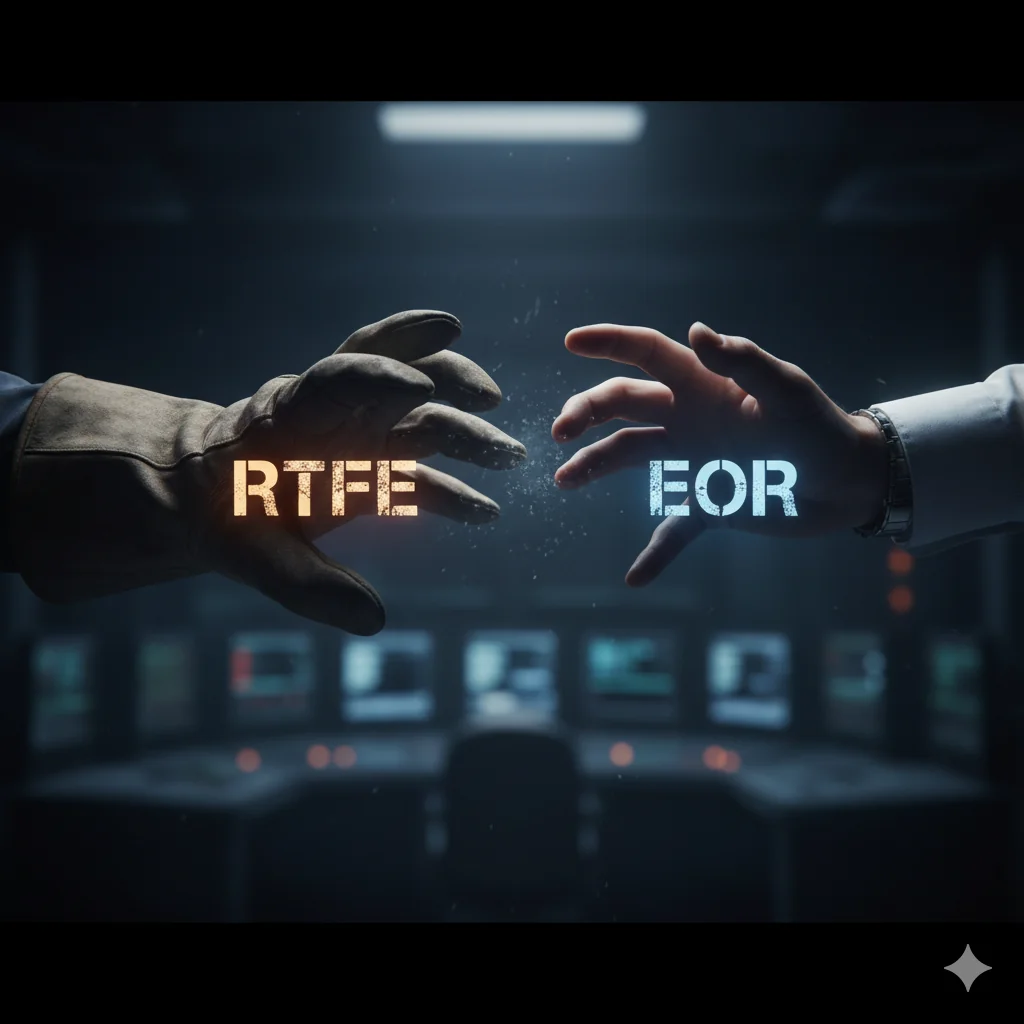
When Your EOR and RTFE Don't Speak the Same Language: Bridging the Communication Gap
When Your EOR and RTFE Don’t Speak the Same Language: Bridging the Communication Gap That Nobody Talks About
Monday morning, 9 AM. The RTFE sends an email to the EOR: “Piezometer P-23 readings elevated. Please advise.”
Tuesday afternoon. EOR responds: “Will review during next site visit scheduled for May.” Wednesday. RTFE notices seepage increasing at downstream toe. Calls EOR, leaves voicemail. Thursday morning. EOR returns call: “Can you send me the monitoring data?” RTFE sends 18-month dataset in Excel. Friday. No responsAnd that risk sits with you.
Does your GISTM compliance system facilitate EOR-RTFE collaboration, or create barriers between them?rom EOR. Monday. RTFE emails again: “Should we be concerned?” EOR responds: “Need to evaluate in context of design assumptions. Will include in quarterly report.” Two weeks later, visible instability develops. Emergency response activated. Investigation reveals the warning signs were present in the data all along. Post-incident review identifies root cause: “Communication breakdown between RTFE and EOR.”
This scenario - or variations of it - happens at mining operations worldwide. Not because people are incompetent. Not because they don’t care. But because GISTM assumes something that often doesn’t exist: Effective communication between the Engineer of Record and the Responsible Tailings Facility Engineer. The standard assigns them complementary roles. But it doesn’t address the communication challenges that prevent them from working effectively together. Let’s talk about the gap nobody wants to acknowledge. The Fundamental Asymmetry: Why EOR-RTFE Communication Is So Hard Most professional relationships have natural communication rhythms. Your surgeon talks to the anesthesiologist before, during, and after your operation. They’re in the same room, working on the same patient, with immediate feedback loops. The EOR-RTFE relationship isn’t like that. The RTFE:
Lives on site or visits regularly Sees the facility daily or weekly Experiences operational realities firsthand Manages day-to-day decisions Feels urgency about immediate concerns Reports to operations management Has budget constraints from mine economics Thinks in operational timescales (days, weeks, months)
The EOR:
Works from office, possibly hundreds of kilometers away Visits site periodically (monthly, quarterly, or less) Sees the facility through reports, data, and occasional inspections Provides technical guidance on design and major decisions Takes broader, long-term view Has professional liability considerations Works on fee-for-service basis Thinks in engineering timescales (seasons, years, decades)
These differences aren’t problems - they’re by design. GISTM wants operations grounded in daily reality and engineering grounded in long-term technical rigor. But the asymmetry creates communication challenges that both sides struggle with - and neither feels comfortable discussing. The Five Communication Failures That Cause Problems Failure #1: “I Don’t Want to Bother Them” Syndrome The RTFE’s internal monologue: “The piezometer reading is higher than usual. But it could just be from last week’s rain. The EOR is busy with multiple projects. If I call about every little fluctuation, they’ll think I’m panicking over nothing. I’ll monitor it for another month and see if it’s a real trend.” What the RTFE doesn’t know: The EOR would much rather receive ten “false alarm” calls than miss one genuine early warning. But they’ve never explicitly said that to the RTFE. Real example from a mine in Nevada: RTFE noticed gradual piezometer increase over three months. Each month, thought: “Probably seasonal. Don’t want to overreact.” By month four, the trend was undeniable. Called EOR, who immediately said: “Why didn’t you call me three months ago?” RTFE response: “I didn’t want to bother you with something that might be nothing.” The EOR was frustrated - not because the RTFE called, but because he didn’t call sooner. Post-incident solution: EOR established explicit protocol: “I want to hear about anything that makes you wonder ‘should I call the EOR?’ If you’re wondering whether to call, the answer is yes. I’d rather discuss ten non-issues than miss one real issue.” Made it explicit. In writing. Part of their working agreement. Result: Communication increased dramatically. 90% of calls were quick discussions (“this is normal because…”). 10% identified genuine concerns requiring action. Failure #2: The Translation Problem (Technical — Operational) EOR speaks in:
Design assumptions and factors of safety Phreatic surfaces and pore pressure ratios Critical state soil mechanics Statistical probability and consequence classification Multi-criteria decision analysis
RTFE speaks in:
Beach slopes and deposition rates Equipment availability and production schedules Contractor performance and weather delays Budget constraints and manning issues Regulatory deadlines and community concerns
Neither language is wrong. But they often talk past each other. Real conversation from a mine in Chile: EOR: “The factor of safety under pseudostatic loading is approaching 1.3. We need to implement mitigation measures to maintain ALARP.” RTFE: “Okay… what does that mean I should do?” EOR: “Reduce the pore pressure ratio in the zone of concern.” RTFE: “How?” EOR: “Dewatering, operational controls, or buttressing.” RTFE: “Can you be more specific? What exactly should I tell operations?” Long pause. Growing frustration on both sides. What was really needed: EOR: “The slope is getting less stable than we’d like. Here are three options:
Install horizontal drains to lower water levels - cost about $500K, takes 3 months Stop depositing on the north side for 6 months to let water drain naturally - no cost but impacts production Build a buttress at the toe - costs $2M, takes a year I recommend option 1. Want to discuss with operations?”
RTFE: “Yes! That I can work with. Let me get the mine manager and we’ll figure out timing and budget.” The difference: Translation from technical assessment to operational action. Many EORs assume RTFEs will translate technical guidance themselves. Many RTFEs are reluctant to admit they need help with translation. Result: Technical guidance that never becomes operational action. Failure #3: The “Scope Creep” Stalemate Scenario: RTFE identifies issue requiring engineering assessment. Calls EOR. EOR: “I can look at that. It’ll be $15,000 for the analysis.” RTFE: (internal panic) “I don’t have budget for that. Let me get back to you.” Two weeks later, issue still unresolved. RTFE tries to assess it internally with available resources. Makes decision without full engineering analysis. EOR hears about decision later: “You should have consulted me before making that change.” RTFE: “I did consult you - you wanted $15K I didn’t have.” Both are frustrated. Neither feels they did anything wrong. The underlying problem: Unclear boundaries around what’s included in baseline EOR services vs. what requires additional scope and budget. Better approach implemented at a copper mine in Arizona: They established three tiers of EOR engagement: Tier 1: Baseline retainer (included in annual agreement)
Routine reviews of monitoring data Annual site visits and inspections Quarterly technical calls Quick consultations (<2 hours) Review of routine reports and documentation Emergency availability (initial assessment and guidance)
Tier 2: Extended engagement (pre-approved budget authority)
RTFE has authority to engage EOR for up to $25K/year for additional analyses or investigations No additional approvals needed Used for: unexpected monitoring results, operational changes requiring assessment, regulatory queries, etc.
Tier 3: Major studies (requires formal approval)
Significant design changes Major risk assessments Alternatives analyses Large capital projects
The key: RTFE knows exactly what they can request without budget worries (Tier 1), has flexibility for moderate needs (Tier 2), and knows when formal approvals are needed (Tier 3). Result: Communication increased because RTFE wasn’t constantly worried about costs. Small issues got addressed before becoming big issues. Failure #4: The Information Asymmetry Trap What the RTFE knows:
Detailed operational history (“we had equipment problems that week”) Personnel changes and capability (“our new foreman is still learning”) Budget pressures (“corporate is cutting costs by 15%”) Community relations (“local village is concerned about dust”) Political dynamics (“the GM doesn’t want to hear bad news”) Informal organizational knowledge (“we tried that before and it didn’t work”)
What the EOR knows:
Detailed design rationale (“we sized that spillway for…”) Historical design decisions (“we considered centerline but chose downstream because…”) Industry experience from other facilities Latest research and technical developments Regulatory trends and emerging requirements Professional liability implications
The problem: Each has information the other needs, but doesn’t know the other needs it.** Real example from a gold mine in Peru: EOR recommended installing horizontal drains to reduce pore pressures. What the EOR didn’t know:
Previous attempt at horizontal drains had failed due to poor contractor quality Operations team had deep skepticism about horizontal drains working Budget constraints meant contractors would be same low-cost provider as before
RTFE implemented the recommendation half-heartedly:
Hired cheapest contractor Minimal oversight during installation Drains installed incorrectly, didn’t work
EOR’s response: “Horizontal drains are proven technology. The problem is implementation.” RTFE’s response: “We told you these wouldn’t work.” Neither actually told the other anything - they just had different information. Post-incident solution: Established protocol: Before EOR makes technical recommendations, RTFE provides operational context. Before RTFE implements recommendations, EOR explains why previous attempts might have failed. Simple example of this working: EOR: “I’m recommending we increase freeboard from 2m to 3m.” RTFE: “Before we proceed, you should know our GM is under pressure to maximize storage. Last time we suggested reducing operating capacity, he fought it for three months. What’s the technical basis we can use to make a strong case?” EOR: “Here’s the risk-based rationale. Under current freeboard, we have only 5 days to respond to design storm. At 3m, we have 12 days. That difference could be critical. I’ll prepare a briefing for your GM focusing on risk reduction and emergency response time.” RTFE: “That’ll work. The GM cares about avoiding emergencies - that’s the angle that’ll get approval.” Sharing operational context allowed EOR to tailor technical recommendations for organizational reality. Failure #5: The “Who Decides?” Ambiguity Scenario: Monitoring shows movement exceeding TARP threshold. RTFE: “We’ve triggered the action level. What should we do?” EOR: “That’s an operational decision. You need to determine appropriate response based on site conditions.” RTFE: “But this is a technical issue requiring engineering judgment. That’s your role.” EOR: “I can provide options, but the RTFE is responsible for facility operations. You need to decide.” RTFE: “I’m not comfortable making that decision without engineering approval.” Hours or days pass while they figure out who decides. The root issue: GISTM defines roles (RTFE responsible for facility operations and integrity; EOR provides design authority) but many situations sit in the gray zone between them. Real example from a zinc mine in Ireland: Piezometer exceeded action threshold. TARP required “operational restrictions.” Question: What restrictions specifically?
Stop all deposition? Reduce deposition rate? Stop deposition on one side only? Continue deposition but with increased monitoring?
RTFE wanted EOR to specify. EOR said RTFE needed to decide based on operational considerations. Meanwhile, deposition continued because no decision was made. Eventually escalated to Accountable Executive, who was frustrated both hadn’t resolved it. Post-incident solution: They developed a “decision authority matrix”: Decision TypePrimary Decision-MakerConsultation RequiredApproval RequiredRoutine operations within designRTFENoneNoneOperations exceeding design assumptionsRTFEEORNoneTARPs (Yellow)RTFEEOR (within 48 hrs)NoneTARPs (Orange)RTFE + EOR jointlyAccountable Executive notifiedNoneTARPs (Red)Accountable ExecutiveEOR + RTFEBoard notificationMinor design modificationsEORRTFERTFE approvalMajor design changesEORRTFE + ITRBAccountable Executive Ambiguity eliminated. Every situation maps to clear decision authority. The Cultural Differences Nobody Acknowledges Beyond role definitions, EOR and RTFE often come from different professional cultures: Engineering Consulting Culture vs. Mining Operations Culture Engineering consulting culture:
Values thoroughness and documentation “Measure twice, cut once” Professional liability focus (“can I defend this decision?”) Prefers complete information before making recommendations Conservative by nature (that’s their job) Success = technically sound work that meets standards Timeframe = “we’ll have the analysis complete in 3-4 weeks”
Mining operations culture:
Values decisiveness and action “Done is better than perfect” Production focus (“how does this affect tonnage?”) Makes decisions with incomplete information (that’s the reality) Risk-taking by nature (mines are inherently risky) Success = meeting production targets safely Timeframe = “we need to decide by Friday”
Neither culture is wrong. But they create friction. Real example: Operations identified ground instability near the tailings facility requiring investigation. Operations perspective: “Stop deposition in that area immediately while we assess. It might be nothing, but we can’t risk it. Better safe than sorry.” EOR perspective: “Let’s not overreact. I need to review the data properly before recommending operational changes. Suspending deposition based on incomplete information might be unnecessary and could impact mine economics.” Tension escalated. Operations thought EOR was cavalier about safety. EOR thought operations was panicking. Reality: Just different professional cultures with different risk tolerances. Resolution: They established protocol:
Immediate step: RTFE can implement temporary operational restrictions based on judgment (no approval needed) Within 48 hours: EOR reviews situation, either confirms restrictions are warranted or provides technical basis for modifying them Within 2 weeks: Full assessment determines long-term approach
Accommodates both cultures: Operations can act decisively on safety concerns. Engineering can provide thorough analysis. Neither culture dominates - they complement each other. The Geographic Distance Challenge When EOR is off-site, communication becomes inherently harder. What’s lost:
Informal conversations (“hey, can I ask you something?”) Visual cues (body language, facial expressions) Spontaneous collaboration (whiteboard discussions) Situational awareness (seeing what’s happening on site) Relationship building (casual interactions)
Real example from a facility in Indonesia: EOR based in Australia, RTFE on site in Kalimantan. Communication was almost entirely via email:
RTFE sent questions, EOR responded days later Context was lost in text-only communication Urgent issues didn’t feel urgent via email Relationship was transactional, not collaborative
They implemented two changes: Change 1: Scheduled video calls
Bi-weekly 30-minute call, standing appointment Casual check-in (“what’s happening on site?”) plus specific issues Video enabled reading body language and building rapport RTFE could show things via phone camera
Change 2: Communication protocol for different urgency levels
Routine: Email, response within 3 business days Important: Email + text message, response within 24 hours Urgent: Phone call (not email), immediate response expected Emergency: Phone call + text to multiple numbers + email, immediate response required
Results:
Response times improved dramatically Relationship quality increased Small issues got resolved before becoming big issues Both sides felt more connected and collaborative
The “Designer of Record” Complication Some operations have internal EORs who delegate design to external “Designer of Record” (permitted under Requirement 9.1). This creates a three-way relationship:
RTFE (operations) EOR (internal, overall responsibility) DOR (external, detailed design)
The communication complexity multiplies. Common problems: Problem 1: Telephone game
RTFE asks EOR a question EOR needs DOR’s input DOR responds to EOR EOR interprets for RTFE Message gets garbled through multiple transmissions
Problem 2: Accountability confusion
RTFE doesn’t know who to contact for what EOR and DOR haven’t clearly divided responsibilities Issues fall through gaps between them
Problem 3: Cost friction
DOR works fee-for-service EOR manages budget for DOR services RTFE needs DOR input but doesn’t control budget Creates barriers to communication
Better approach from a mine in Canada with internal EOR + external DOR: Clear interface agreement:
RTFE contacts EOR for all operational and monitoring issues RTFE contacts DOR directly for construction and design details (with EOR copied) Weekly three-way call (RTFE + EOR + DOR) to coordinate Annual budget includes pre-approved DOR time for RTFE consultations Clear documentation of “who decides what”
Key insight: Three-way relationships require explicit coordination protocols. Can’t assume everyone will figure it out organically. The Technology That Helps (And the Technology That Doesn’t) Technology that makes EOR-RTFE communication worse: Massive email chains: 47 people copied, unclear who needs to respond, critical information buried Overwhelming data dumps: “Here’s 18 months of monitoring data in Excel, please advise” Generic project management tools: Designed for construction projects, not ongoing facility management Technology that makes EOR-RTFE communication better: Shared monitoring dashboards: Both can see real-time data with context (historical trends, TARP levels, etc.) Integrated communication platforms: Discussion threads linked directly to specific monitoring points or facility elements Video collaboration: Screen sharing for reviewing data together, annotating photos, sketching solutions Structured data requests: Instead of “send me all the data,” system prompts for specific parameters, timeframes, and context Real example from a progressive operation: They implemented a collaborative platform where:
RTFE flags monitoring data with questions (“Is this normal?”) EOR receives notification with direct link to specific data Discussion thread captures the conversation Resolution documented automatically System learns over time (similar questions in future link to past discussions)
Result: Average response time dropped from 3 days to 4 hours. Quality of communication improved because questions came with context. Building the Relationship: What Actually Works The best EOR-RTFE relationships we’ve seen share common elements: Element 1: Explicit Communication Agreement Written document (not formal contract, more like working agreement) covering:
Communication expectations (frequency, methods, response times) Decision authorities (who decides what, who needs consultation) Budget and scope (what’s included, what requires additional authorization) Escalation pathways (when to involve Accountable Executive, when to convene ITRB) Information sharing (what each side commits to providing proactively)
Real example from a nickel mine: Their “EOR-RTFE Working Protocol” included:
Standing monthly video call (can be cancelled if nothing to discuss, but default is to meet) Quarterly site visit by EOR 24-hour response commitment for urgent issues Pre-approved $20K annual budget for RTFE-initiated analyses “No stupid questions” culture - RTFE encouraged to ask anything
Both signed it. Reviewed annually. Adjusted based on what was working. Element 2: Shared Understanding of Facility Many communication problems stem from EOR and RTFE having different mental models of the facility. Effective approach: Site orientation for new EOR: Don’t just tour the facility - RTFE explains operational realities, challenges, quirks, history Design basis briefing for new RTFE: EOR explains why facility was designed this way, what assumptions it’s based on, what’s most critical Annual “state of the facility” session: Deep dive into current conditions, performance, concerns, future plans - both perspectives integrated Real example: A mine brought in new RTFE. Previous RTFE had been there 12 years and had deep institutional knowledge. New RTFE’s first month:
Half-day session with EOR going through complete design history Site tour with previous RTFE explaining operational nuances Review of past 5 years of monitoring data with EOR providing context Discussion of “near misses” and “lessons learned” from facility history
Result: New RTFE was effective much faster than typical. Communication with EOR was productive from day one because they shared understanding of the facility. Element 3: Regular Communication (Not Just When Problems Arise) Poor pattern:
Communicate only when issues emerge Relationship is transactional Each interaction starts from scratch
Better pattern:
Regular check-ins whether or not problems exist Relationship is collaborative Continuous shared understanding
Real example from a copper mine: They instituted “monthly facility discussions”:
30-minute video call, standing appointment Agenda: monitoring review, upcoming activities, any concerns, general discussion 70% of calls: “Everything looks good, nothing urgent” 30% of calls: Identified emerging issues, discussed proactively
The value: The 70% of “nothing urgent” calls enabled productive collaboration during the 30% when issues arose. Relationship had momentum. Element 4: Mutual Respect for Expertise The RTFE knows things the EOR doesn’t (operational realities, site history, organizational dynamics) The EOR knows things the RTFE doesn’t (design rationale, technical analysis, broader industry experience) Effective relationships: Both sides respect what the other brings Ineffective relationships: One side dismisses the other’s input Real scenario illustrating this: RTFE observed that tailings beach was consistently steeper than design assumed. Dismissive EOR response: “The design parameters are based on sound engineering. The beach should match our assumptions. You must be measuring wrong.” Respectful EOR response: “Interesting - that’s not what we predicted. Let’s figure out why. Maybe material properties are different than tested, or deposition practices are creating conditions we didn’t anticipate. Can we investigate together?” The difference: Respectful response leads to learning. Dismissive response creates friction and misses opportunities to improve understanding. Conversely: EOR recommended installing additional monitoring. Dismissive RTFE response: “We have enough monitoring already. This is just consultants trying to generate fees.” Respectful RTFE response: “Help me understand why you think additional monitoring is needed. What would it tell us that current monitoring doesn’t? Then I can assess whether the value justifies the cost.” The difference: Respectful response leads to informed decisions. Dismissive response damages relationship and might miss legitimate technical needs. The Accountable Executive’s Role in Enabling Communication GISTM Requirement 8.4 says the Accountable Executive “must have scheduled communication with the EOR.” But the Accountable Executive should also enable EOR-RTFE communication. How:
- Set Expectations
Make clear that EOR-RTFE collaboration is expected and valued Include “quality of EOR relationship” in RTFE performance reviews Ask EOR about collaboration effectiveness during contract reviews
- Remove Barriers
Ensure budget exists for EOR engagement (don’t make RTFE beg for resources) Provide communication tools that facilitate collaboration Support time allocation (RTFE needs time to work with EOR, not just execute tasks)
- Monitor Effectiveness
Periodic check-ins: “How’s communication with the EOR working?” Watch for warning signs (delays in addressing issues, lack of technical clarity, relationship tension) Intervene early when communication breaks down
- Model Behavior
In interactions with both EOR and RTFE, demonstrate collaborative approach Ask questions that require joint EOR-RTFE response (forcing collaboration) Recognize and reward effective teamwork
Real example of Accountable Executive enabling communication: Monthly meeting format:
RTFE presents facility status EOR provides technical perspective Discussion requires both to contribute
One month: RTFE presented monitoring data showing elevated piezometers. Explained operational context (heavy rains, increased deposition). EOR: “The readings are elevated but still within expected ranges given the precipitation. No immediate concern but worth watching.” Accountable Executive: “Help me understand - what would make this concerning? At what point would we take action?” Forced EOR and RTFE to jointly articulate: Specific threshold values, timeframe for trend assessment, operational responses if thresholds exceeded. Result: Both left meeting with shared understanding and clear action plan. This is Accountable Executive enabling EOR-RTFE alignment. The Compliance System Opportunity GISTM compliance platforms can either help or hinder EOR-RTFE communication. Platforms that hinder:
Separate systems for operations (RTFE) and engineering (EOR) No shared visibility into data, issues, or decisions Communication happening through system is cumbersome Documentation requirements feel bureaucratic
Platforms that help:
Single source of truth that both access Facilitates discussion (threaded conversations linked to specific issues) Makes information sharing easy (not 18-tab Excel files) Captures decisions and rationale (builds shared knowledge) Enables async collaboration (across time zones and schedules)
What an ideal system enables: Shared Monitoring Dashboard
Both EOR and RTFE see same data with same context RTFE can flag data with questions EOR can annotate with technical perspective Discussion captured in context
Issue Tracking
RTFE raises concern System routes to EOR automatically Tracks status (under review, action required, resolved) Documents outcome for future reference
Knowledge Base
Design rationale accessible to RTFE Operational history accessible to EOR Past issues and resolutions searchable Evolving understanding documented
Communication Audit Trail
When issues were raised How quickly they were addressed Quality of collaboration Identifies communication gaps
Real benefit: System makes effective communication easier than poor communication. Default behavior becomes collaboration. The Question You Must Ask Your facility has an RTFE. It has an EOR. But do they have an effective working relationship? Warning signs they don’t:
Issues take weeks to resolve (lots of back-and-forth) Misunderstandings are common Decisions get made without appropriate consultation Relationship feels transactional or adversarial Either side complains about the other (even informally) Technical guidance doesn’t translate into operational action Monitoring data doesn’t get reviewed collaboratively Surprises emerge that one side didn’t know about
Signs of effective relationship:
Issues get resolved quickly (collaborative problem-solving) Communication is easy and frequent Decisions integrate both operational and technical perspectives Relationship feels collaborative Both sides speak positively about working together Technical guidance becomes operational action smoothly Monitoring reviewed jointly with shared understanding Few surprises (both maintain awareness of facility status)
If you’re seeing warning signs, you have work to do. And here’s the thing: Neither side will probably raise this explicitly. The RTFE doesn’t want to admit they’re struggling to work with the EOR. The EOR doesn’t want to admit the RTFE isn’t implementing recommendations. Both hope it’ll get better. It won’t get better on its own. Communication problems compound over time. As Accountable Executive, you need to:
Ask directly: “How’s your working relationship with the EOR/RTFE? What’s working? What’s not?” Observe: Sit in on their interactions. Do they collaborate effectively or talk past each other? Facilitate: If communication is struggling, bring them together to work through it Provide resources: Tools, time, budget to enable collaboration Hold accountable: Make communication quality an expectation, not an aspiration
Because here’s the reality: GISTM creates a system where RTFE and EOR must work together effectively. If they can’t communicate, the system breaks down. Your monitoring system becomes less effective. Trends get missed, responses get delayed. Your risk management becomes less effective. Issues aren’t identified early, decisions lack full technical basis. Your adaptive management becomes impossible. Can’t adapt to changing conditions without collaborative assessment. Most importantly: When genuine emergencies occur, effective EOR-RTFE communication could mean the difference between crisis averted and catastrophic failure. They need to speak the same language - not just literally, but organizationally, culturally, professionally. And if they’re not, that’s your problem to solve. Because the consequence of poor EOR-RTFE communication isn’t just inefficiency. It’s risk. And that risk sits with you.
Does your GISTM compliance system facilitate EOR-RTFE collaboration, or create barriers between them? [Discover platforms designed for effective communication —]Tentar novamenteP