

Argentina & Smaller-Scale Mines: Affordable GISTM Actions That Work
Practical, cost-conscious tailings actions for Argentina's small- and medium-scale mines: triage, low-cost engineering fixes, monitoring basics, and staged upgrades aligned with GISTM.
Introduction: the dilemma facing smaller operators
Argentina’s mining sector includes both large, well-capitalized projects and many smaller operations or junior developers. For the latter, meeting global expectations like the Global Industry Standard on Tailings Management (GISTM) can feel daunting: the full suite of retrofits, filtered tailings plants or major dam rebuilds is costly. Yet the risk is real, both to people and to a project’s viability if regulators, financiers or communities lose confidence. The practical question is: what affordable actions deliver the biggest safety and compliance gains today? (Short answer: prioritize consequence-based triage, inexpensive monitoring and phased, funded upgrades.)
Start with triage: spend where it matters most
Small operators should begin by categorizing their tailings facilities using a simple consequence classification: which dams threaten people, critical infrastructure or key water sources if they fail? Focus immediate attention and limited capital on the top 10–20% that carry the most downstream consequence. A quick, documented triage (even a 1-page spreadsheet) will guide auditors and financiers and help justify staged spending. This approach mirrors best practice guidance adopted globally and reduces wasted effort on low-risk assets.
What to include in a one-page triage: facility name, downstream receptors (people/water/ecosystem), likely failure modes, short-term mitigations required, and estimated budget band for next 12 months.
Low-cost, high-impact engineering fixes (quick wins)
You don’t need a multimillion-dollar rebuild to reduce acute failure risk. For many small TSFs, these lower-cost measures materially improve safety:
Lower pond level (freeboard management): Reducing stored water by modest volumes cuts pore pressures and liquefaction potential. Often the quickest and cheapest risk-reduction step.
Improve drainage and seepage control: Add or clear drains, construct berms to divert surface runoff, and install inexpensive seepage collection. These measures protect foundations and downstream water.
Surface protection and erosion controls: Geotextiles, riprap for spillways, and vegetation on slopes reduce scour during storms.
Temporary buttressing: Rockfill or compacted berms beneath critical sections can be an interim stabilizer until larger works are funded.
Document each action, its expected safety gain, and monitoring requirements: auditors and regulators want to see a logical, evidence-based program rather than ad hoc work. Many operators in Latin America use these staged measures while planning longer-term fixes.
Affordable monitoring: do the essentials well
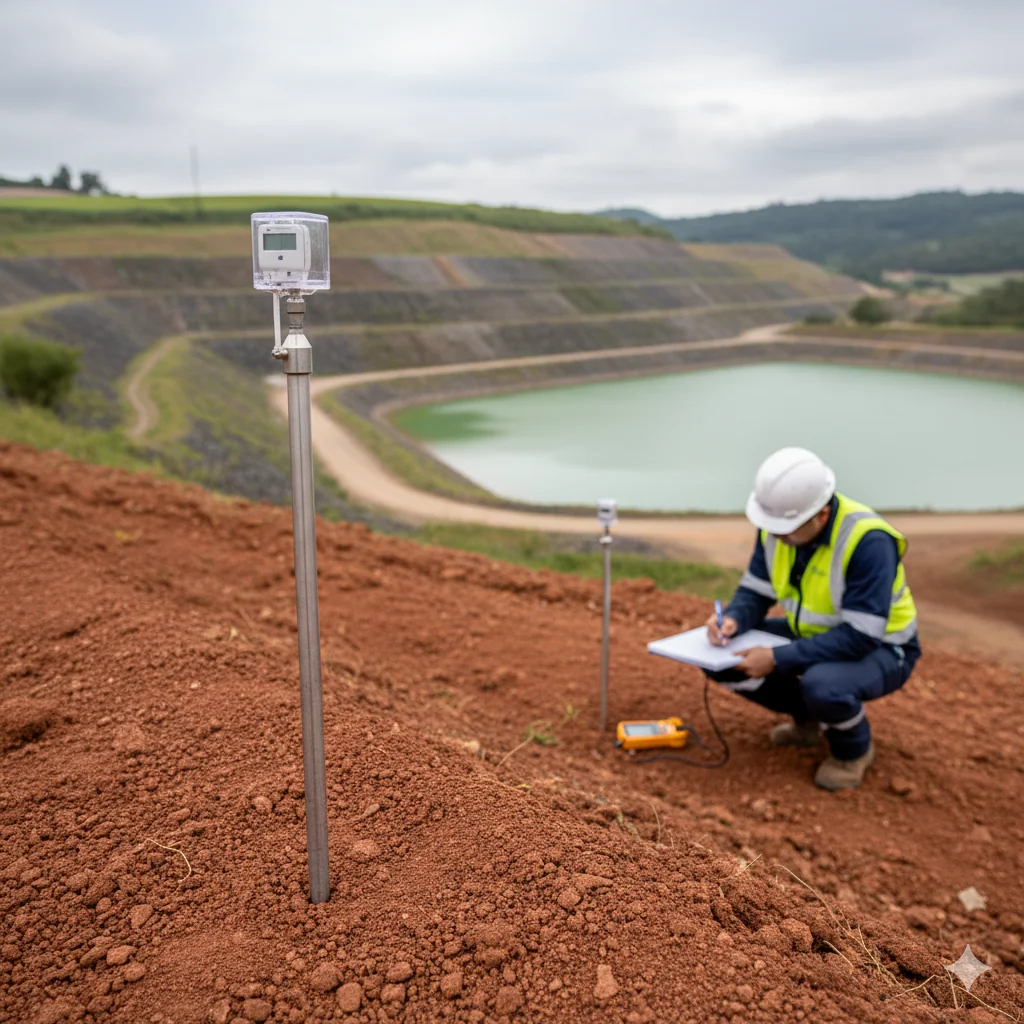
You don’t need an elaborate sensor grid to gain meaningful early warning. Affordable, pragmatic monitoring packages that small mines can implement:
Manual inspection checklist + logbook: Daily visual checks recorded by trained staff (crest, seepage, pond level, cracks), an often-overlooked but powerful control.
Key instruments: 2–4 piezometers at critical locations, basic surface-level markers (survey pins or GNSS points) and a staff gauge on the pond, low cost, high value.
Periodic InSAR or drone surveys: Contracted quarterly/biannual drone flights or satellite InSAR checks can supplement site instruments without full-time investment.
Clear alarm thresholds & duty rota: Define simple trigger levels (e.g., rising pond level X cm, visible crest cracking) and assign a named responder with a contact tree.
A focused combo of manual checks, a few well-placed instruments, and an external remote-sensing cadence gives surprisingly good situational awareness at modest cost.
Phased upgrades and financing options
Full conversion to paste or filtered tailings may be out of reach immediately. Instead:
Short-term (0–12 months): triage + quick wins + monitoring + emergency SOPs.
Medium-term (1–3 years): targeted retrofits (drainage, buttressing), explore partial thickening and water-reuse pilots.
Long-term (3–7 years): plan for filtered/paste conversion or engineered dam replacement if consequence and economics justify it.
To fund these steps, consider blended options: dedicate a portion of operating cashflow to a closure or remediation trust; require contractor financing for certain upgrades; seek co-financing or technical assistance from provincial programs (some provinces provide incentives) or industry pools. Where many small operations exist in a basin, a pooled remediation fund or shared services for monitoring/remote sensing can cut unit costs. These pragmatic financing mixes are more feasible than expecting immediate full capital conversion.
Community engagement and transparency, low-cost insurance
Small operators often underestimate the value of simple, transparent communication. Regular, plain-language updates on monitoring results, an accessible grievance mechanism, and a few community drills or public briefings buy huge social capital. Communities value predictability and accountability; even modest transparency reduces the chance of disruptive local opposition that can halt operations. Keep records of consultations, this documentation is also valuable for GISTM-aligned disclosures.
Practical checklist for the next 90 days (actionable)
Run the 1-page consequence triage for all facilities.
Implement at least two quick wins on your highest-consequence site (lower pond + improved drainage).
Install 2–4 piezometers and set up a daily inspection log with a duty holder.
Draft a short emergency SOP and run a tabletop exercise with local authorities.
Start a modest, ring-fenced remediation fund (even a small monthly accrual shows seriousness).
Publish a one-page community brief and a contacts list for concerns.
These actions create immediate, demonstrable progress for auditors, investors and communities while you plan larger changes.
Closing: practical compliance that fits small budgets
GISTM raises the bar, but it doesn’t mean small mines must be paralyzed by cost. By prioritizing consequence, executing low-cost engineering fixes, implementing focused monitoring, staging upgrades, and building trust through transparency, smaller Argentine operations can achieve meaningful, defensible risk reduction. Those steps protect communities and the project’s long-term value, and they put operators on a credible path toward full GISTM alignment.
Sources & further reading: Global Tailings Review; regional policy analyses; practical guides for small mine monitoring.
Work through GISTM requirements
Use GISTM.net to work through GISTM requirements and evaluate your facility’s conformance as you turn these ideas into an action plan.